

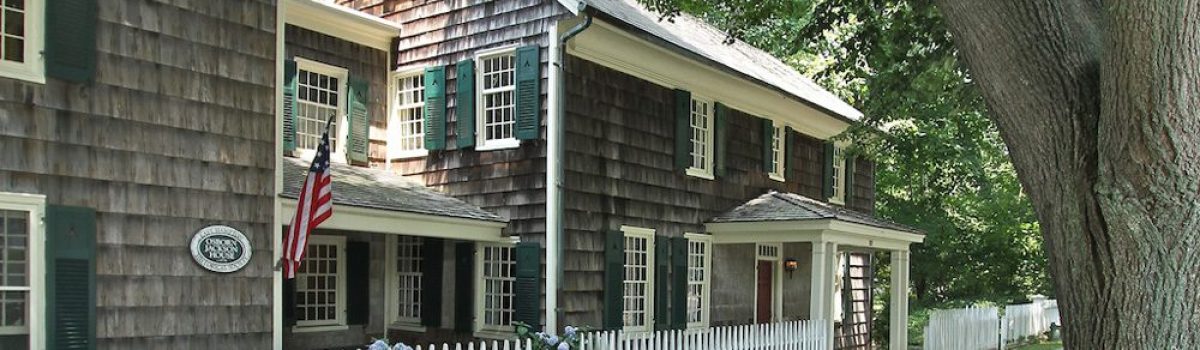
Osborn-Jackson House
Share this page
This Colonial house, one of the few still in its original position on Main Street, is owned and maintained by the Village of East Hampton. It serves as the headquarters for the East Hampton Historical Society as well as being a period house museum for the general public.
The Osborn-Jackson House, named for its first and last owners, was built in the second quarter of the of eighteenth century. Owned and lived in by six generations of Osborns until the late 1960’s, it has been ‘modernized’ by each successive generation. The original house on this site, thought to have been built in 1723, would have been a one-story house with a huge gable roof containing sleeping and storage areas. This was the family home of ‘Deacon’ Daniel Osborn. In about 1760, when Daniel died, his son Jonathan inherited the house and enlarged it. The full second story was added, along with the high style plaster cove cornice across the facade. He was a weaver, possibly using the large, well lighted upstairs southeast room for his looms and other equipment. After Jonathan, the house was owned successively by his son Joseph and his son Sylvanus and his grandson Edward E. Gardner, until the mid-20th century.
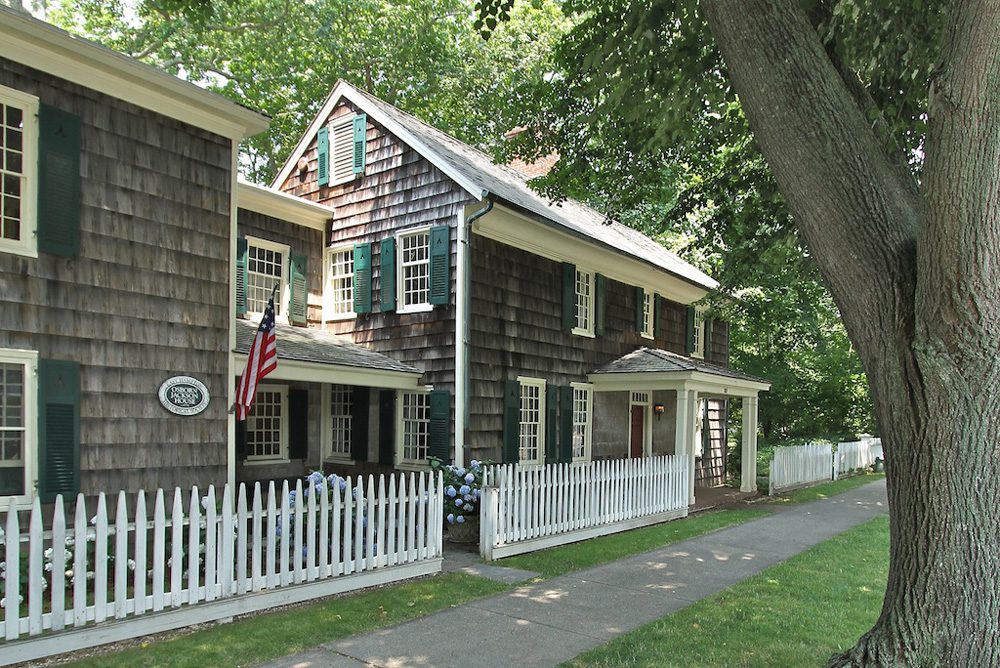
The House in 1870
The front door opens into the typical small hall of the early eighteenth century with its ‘winder’ stairs set into the back of the chimney. In accord with mid-nineteenth century use in gentry homes, there are two parlors, left and right.
The north, or right, parlor represents the 1870 study/office of 55-year old Sylvanus Osborn (1815-1886). An elected Town Trustee, Town Clerk, school teacher and ornithologist, he also drove his horse and buggy to meet the New York boat at Sag Harbor to pick up the summer boarders, bringing them to East Hampton!
In the south parlor, note the initials, SMO (for Sylvanus Mulford Osborn!) carved in the fireplace hearth. This parlor was where ailing Aunt Fanny received a constant stream of visitors both young and old. Frances Hunting was the unnamed sister of Mary-Mariah (Hunting) Osborn, Sylvanus’ mother. In her extensive diaries she noted many details of 19th century East Hampton including the arrivals of summer visitors, where they were from and where they boarded.
Across the rear of the house is the kitchen, with its early open-hearth fireplace and bake oven which has remained intact over the years through many alterations. The cook/housekeeper reigned here, preparing meals for the family of seven and the Irish farm helper, 23-year-old Coleman Cormelly who lived in the house with the family. As one of East Hampton’s early gentry families, the Osborn family would have been engaged in the raising of sheep, cattle and horses, which provided the base for products local merchants traded with the West Indies. In the year 1870, an extended Osborn family owned and lived in this house. According to the State and Federal census, Joseph Osborn, age 81, owned 178 acres of pasture and meadow. (In 1865, the farm was considered worth $4,000!).
Lionel Jackson donated the property to the Village of East Hampton in 1977 for use as a museum. Since then, the East Hampton Historical Society, established in 1921, has administered the site for public programming and exhibitions.
The 0sborn-Jackson House Museum is open year-round on weekdays from 9:00 a.m. to 5:00 p.m. The 0sborn-Jackson House Museum is featured on the Historical Society weekend Historic District Walking Tours.
Follow us on our social media
