Historic East Hampton
 The town includes the village of East Hampton, part of the village of Sag Harbor, (the other part belongs to Southampton Town) and the unincorporated hamlets of Wainscott, Springs, Amagansett and Montauk which together make the Town of East Hampton.
On a modern note, what sets East Hampton apart from the other Hamptons is a government intent on preserving its quaint and charming small town character – here you won’t see sprawling malls, neon lights, fast food stores and other modern day intrusions (not even self-serve gas stations) littering the highways and roads leading into East Hampton.
Wainscott
Coming from the West, Wainscott is the first hamlet encountered when entering the town limits. It is basically still farmland though new vacation homes are beginning to proliferate among the classic structures dating back to the 1700’s.
Sag Harbor
North of Wainscott is Sag Harbor, a quaint village that was once an important whaling town and until the middle of the last century, rivaled New York as the busiest port of entry in the United States. Its spectacular views and idyllic setting make it a favorite of writers and artists who seek inspiration away from the social frenzy of the other villages.
During the latter part of the last century, Sag Harbor being part in Southampton and part in East Hampton, hovering between a “dry” village on one side and a “wet” one on the other dubbed the dividing line, Division Street. At the end of the street, on the wharf, was a bar: predictably, half the bar was dry, and half was wet. Back in the day, we’re guessing thirsty customers bellied up to one side of the bar.
Village of East Hampton
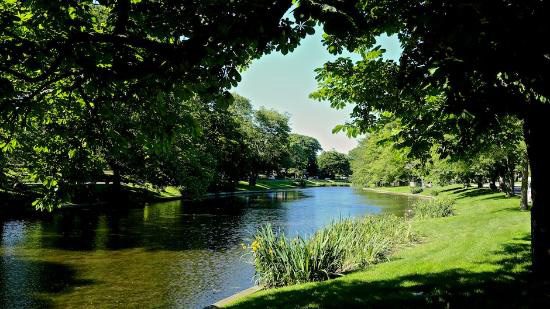
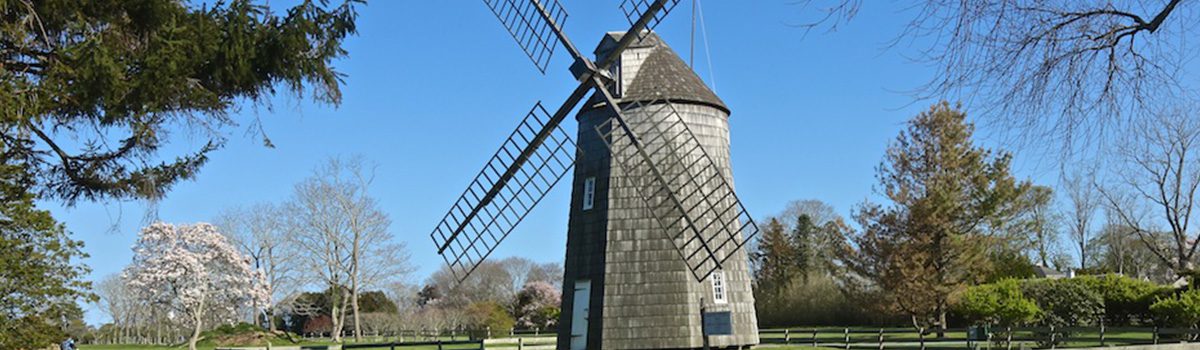
The Village of East Hampton was voted “America’s Most Beautiful Village” by National Geographic. Thanks to a strong preservationist policy, the village has maintained its quaint, small town character. There are majestic old elms, green expanses, windmills, of the English, not Dutch variety, and the famous Town Pond with its with 300 year old cemetery – a virtual voyage back in time.
Right in the middle of the Village, before the historic Hook Windmill that dominates the green triangle is a fork in the road leading on the left (North Main Street) to the northern part of the town and on the right (Montauk Highway) leading further east.